Pixel & Bracket
Turning what I learn into something useful for others.
Pixel & Bracket grew alongside my career and eventually became my full-time business. Teaching software sharpened how I explain complex work; running the business taught me to research demand, make decisions, and follow through.
The beginning
Build around a skill I wanted to keep practicing.
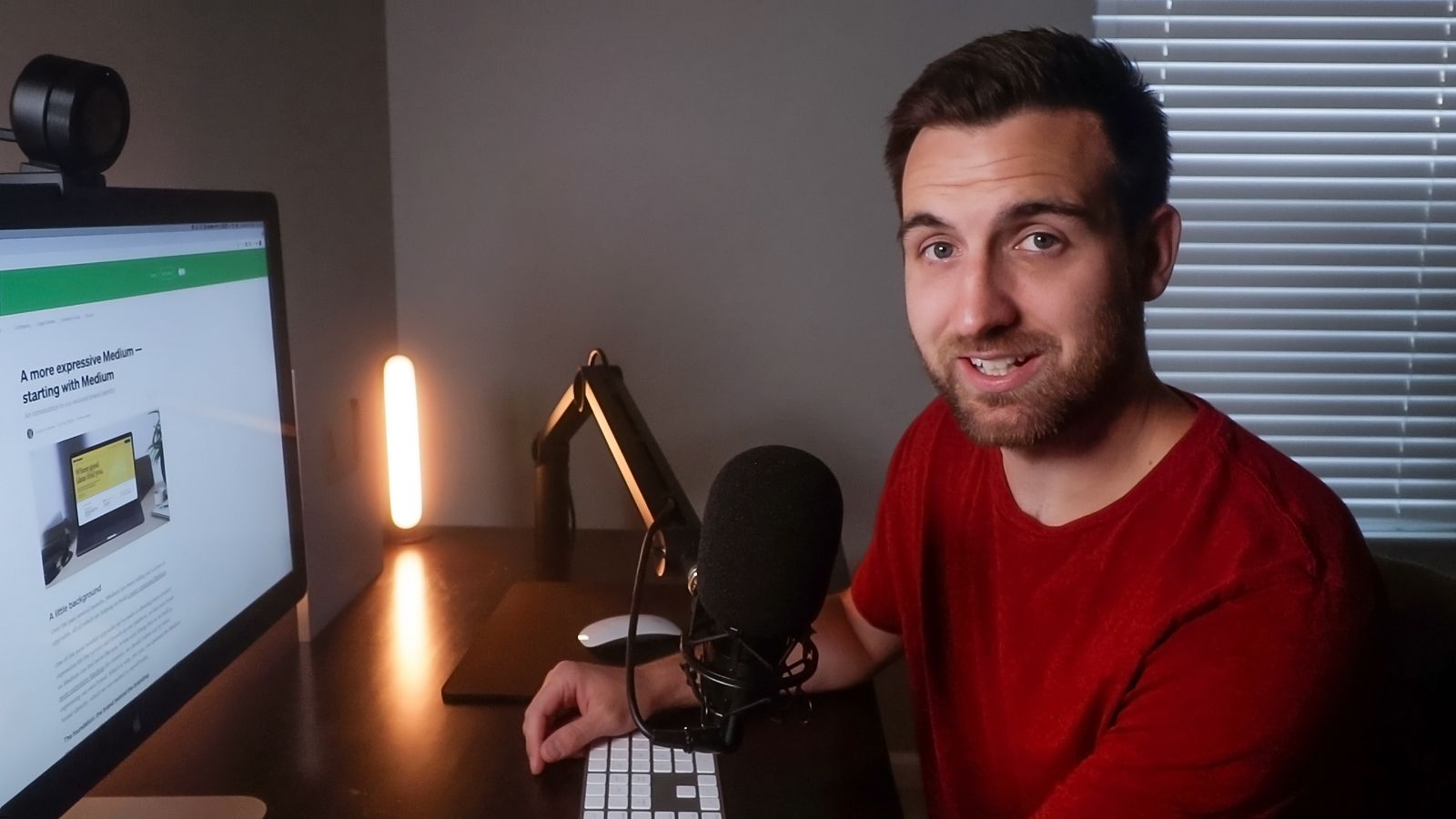
I started the Pixel & Bracket channel in 2015 and began running the business in early 2016, while I was still at Beck’s. It continued alongside my work at Pacers Gaming before I made it my full-time focus in September 2024.
The early catalog centered on Adobe design tools. Over time, it expanded into Figma, Canva, Framer, website builders, and everyday technology questions. Learning new software and explaining it became a repeatable part of my work.
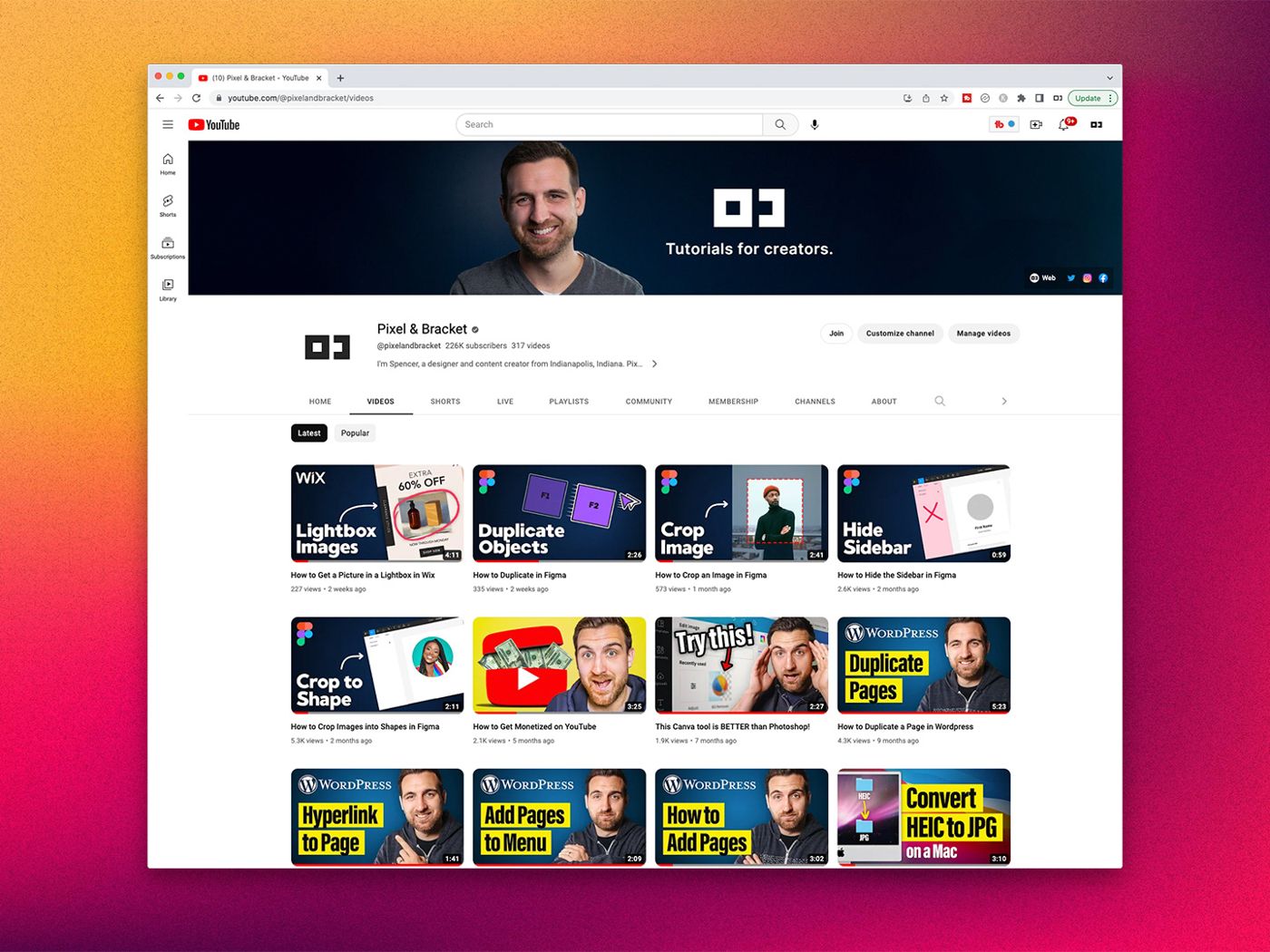
By September 2026, the network had reached roughly 334,000 subscribers, 71 million views, and more than 2,500 videos. Those totals reflect years of building a library of useful answers.
Teaching
Notice the steps an experienced person skips.
A tutorial starts with a task: resize an image, group layers, or make a particular shape. I have to understand the software well enough to explain what to do, in what order, and what someone should see along the way.
That practice sharpened my attention to assumptions. A familiar panel, a selected layer, or a hidden setting can be the missing step that leaves someone behind. Teaching makes me look at the experience from the perspective of someone encountering it for the first time.
I’ve carried that habit into product design. I pay attention to labels, sequence, feedback, and the point where a person needs guidance. It also helps me explain decisions to collaborators.
Research & focus
Let real questions guide the work.
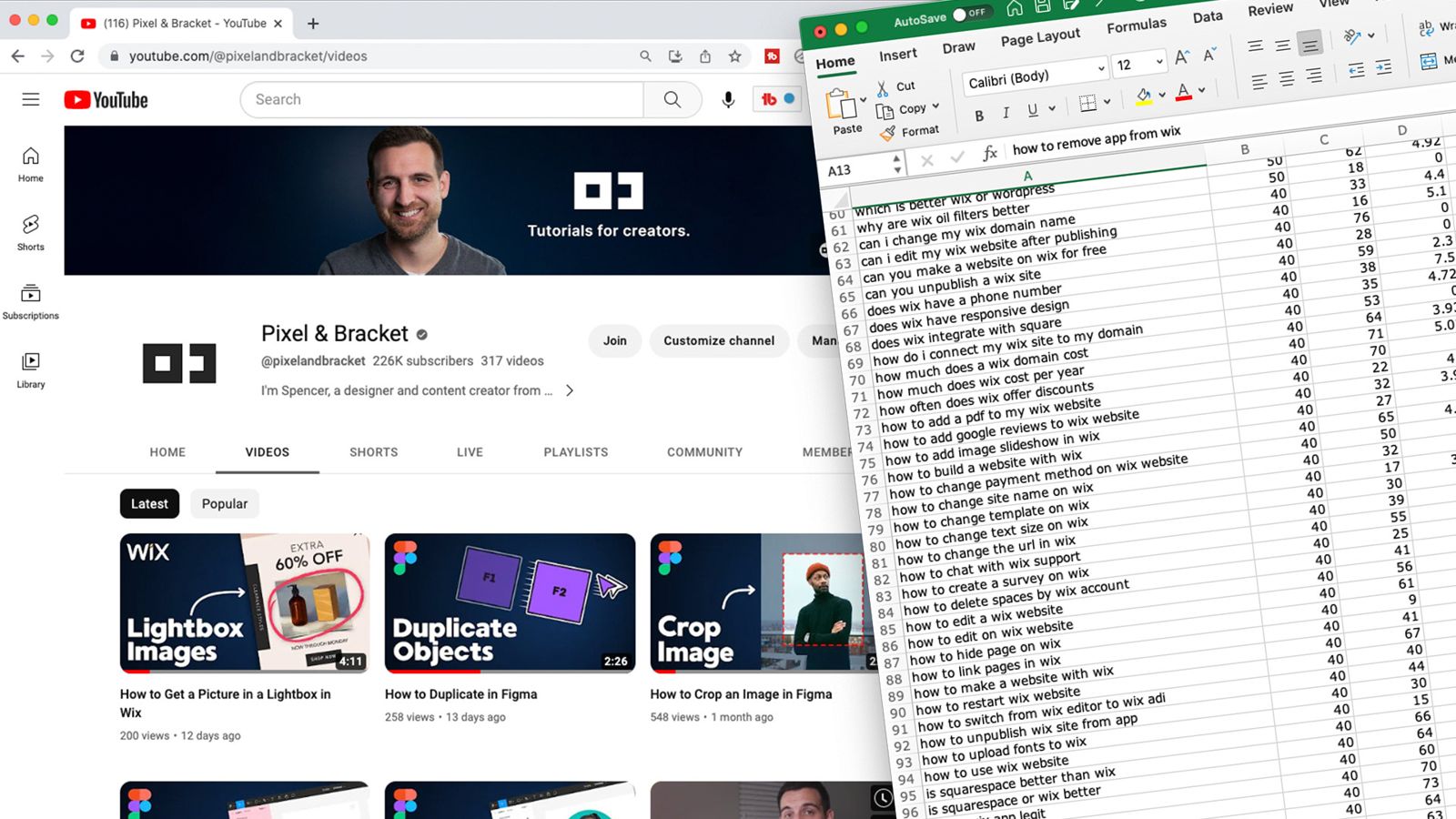
I use keyword research, search suggestions, and channel data to choose topics. The strategy is to build an evergreen library around questions people keep asking, so a useful lesson can continue finding viewers after its first week.
I also separated Illustrator, Photoshop, and InDesign into dedicated channels. That gave each audience a more focused destination while allowing the main channel to explore other tools and topics.
This developed my ability to narrow a broad opportunity into a specific next piece of work. Research helps me decide where to spend production time; publishing and observing the result help inform the next decision.
Business ownership
Carry the work through production and delivery.
Running Pixel & Bracket means owning more than the lesson. The business includes YouTube advertising and memberships, courses, affiliate partnerships, written tutorials, and a library of free project files.
I’ve also produced commissioned educational content. A Wix engagement from November 2018 to January 2019 involved a 16-video website-builder tutorial series. That work required me to teach another company’s product while collaborating through review and delivery.
For Framer, I went from first-time user to building a link-in-bio website and publishing a 50-minute tutorial in one week. Read how I learned, built, and taught the project →
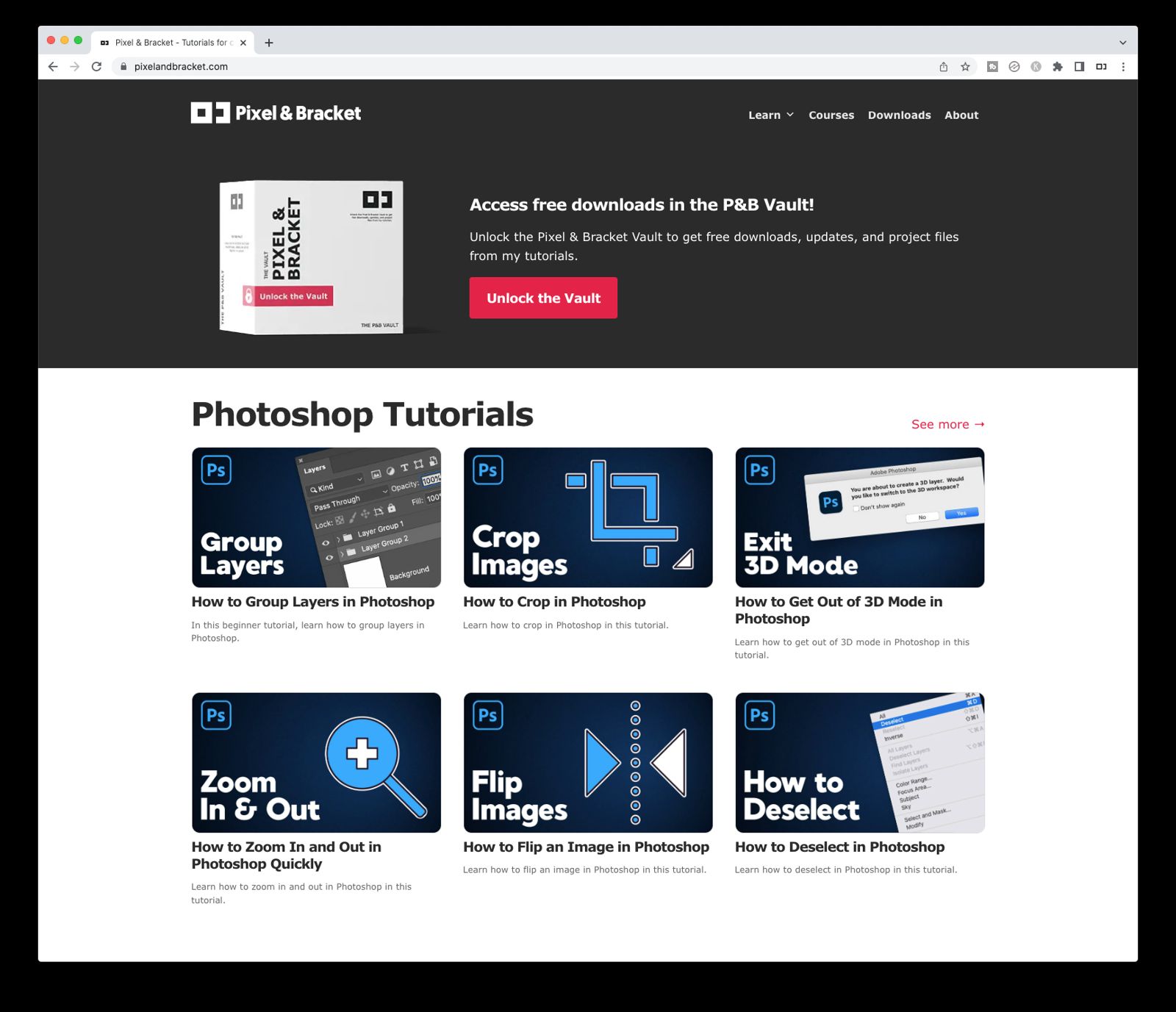
The website extended the same teaching approach into written form. I customized its WordPress theme with HTML/CSS, organized tutorials, and monitored search performance. Different formats gave me more ways to make the same knowledge accessible.
What came next
Use the work to discover what needs building.
Producing tutorials also exposes repeated friction in my own workflow. I now use AI coding tools to build and refine working tools, including Top10k for content research and Redact Pro for controlling redaction in recordings.
Over the past year, I’ve also moved from individual AI tools to an ICM folder structure with repeatable stages, saved outputs, and review checkpoints. My video-production workflow is now central to creating content for Pixel & Bracket, and its shared instructions let me work across compatible AI tools and models. Read how I learned to build and run agentic workflows →
I co-founded ConvertSave with my brother Hunter and design the product. That has extended my responsibility into software decisions, developer collaboration, release, and customer support.
The connection is straightforward: learn the problem closely, explain it clearly, and take responsibility for making something useful. Pixel & Bracket gives me a place to practice all three.
What I bring
What I bring to a team.
- Clear communication
- Years of teaching have trained me to make complex tasks understandable and notice where someone may need help.
- Self-directed learning
- I learn unfamiliar tools by using them, explaining them, and applying what I learn to the next project.
- Business ownership
- I can connect research, production, distribution, and support—and keep moving when the next step is mine to define.